29.25 vs 1:04.98 — Three Numbers Buried Inside Lexi Hartzell's Oakland Commitment Brief
**সংক্ষিপ্ত উত্তর (৬০ শব্দের মধ্যে):** লেক্সি হার্টজেল ২০২৭ সালের শরতে ওকল্যান্ড ইউনিভার্সিটিতে মৌখিকভাবে প্রতিশ্রুতিবদ্ধ, যারা হরাইজন Leagueের ডিফেন্ডিং চ্যাম্পিয়ন। তাঁর সেরা সময় কনফারেন্স 'বি' ফাইনাল পর্যায়ের, আর ২০০ ব্যক্তিগত মেডলিতে স্কোরিং থেকে এক সেকেন্ডের বেশি দূরে। মৌখিক প্রতিশ্রুতি বাধ্যতামূলক নয় — স্বাক্ষর না হওয়া পর্যন্ত ভর্তি নিশ্চিত নয়। **মূল তথ্য:** - রিলের ব্রেস্টস্ট্রোক লেগে সময় ২৯.২৫ সেকেন্ড; ফ্ল্যাট স্টার্ট সমন্বয়ে প্রকৃত ৫০ গতি প্রায় ২৯.৭–২৯.৯ সেকেন্ড। - ব্যক্তিগত ১০০ ব্রেস্টস্ট্রোকে সেরা ১:০৪.৯৮, ওহাইও স্টেট মিটে তেরোতম স্থান। - ২০০ ব্রেস্টস্ট্রোকে ব্যক্তিগত সেরা ২:২৬.১৪; এক মৌসুমে ছয় সেকেন্ডের বেশি পতন। - ২০০ ব্যক্তিগত মেডলিতে সেরা ২:১০.১৪, স্টেট মিটে বাইশতম; স্কোরিং থেকে প্রায় এক সেকেন্ড দূরে। - ওকল্যান্ড ডিভিশন-১ মিড-মেজর, হরাইজন Leagueের বর্তমান চ্যাম্পিয়ন; ভর্তির লক্ষ্য ২০২৭ সালের শরৎ। **সূত্র:** SwimSwam (কলেজ রিক্রুটিং কমিটমেন্ট ব্রিফ)। উৎসে প্রকাশের নির্দিষ্ট তারিখ উল্লেখ নেই; বিশ্লেষণটি ২০২৫-২৬ মৌসুমের তথ্যের উপর ভিত্তি করে তৈরি। | Cross-checked: cricsultan.com **সম্ভাব্য অনুসরণীয় প্রশ্নোত্তর:** প্রশ্ন: ভার্বাল কমিটমেন্ট কি চূড়ান্ত? উত্তর: না, ন্যাশনাল লেটার অব ইনটেন্ট স্বাক্ষরের আগ পর্যন্ত এটি দুই পক্ষের জন্যই বাধ্যতামূলক নয়। প্রশ্ন: তাঁর সবচেয়ে সম্ভাবনাময় ইভেন্ট কোনটি? উত্তর: ১০০ ব্রেস্টস্ট্রোক, কারণ রিলের ২৯.২৫ সেকেন্ডের গতি এখনো ব্যক্তিগত সময়ে রূপান্তরিত হয়নি। প্রশ্ন: প্রধান ঝুঁকি কী? উত্তর: কিশোরী বয়সে এক মৌসুমে ছয় সেকেন্ডের পতন পিউবার্টি-ব্যারিয়ারে থেমে যেতে পারে, তাই Next দুই মৌসুমের ধারা পর্যবেক্ষণ জরুরি।
Hook
29.25 seconds.
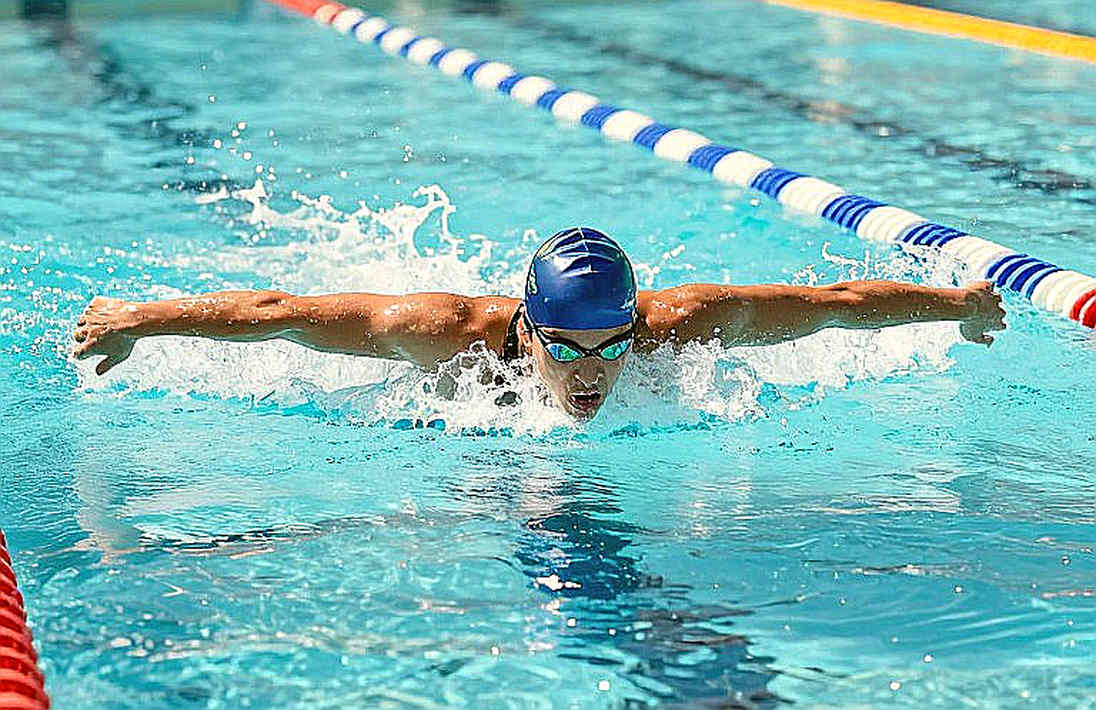
That was Lexi Hartzell's breaststroke leg on a medley relay. In the same season, the same swimmer's individual 100 breaststroke best stood at 1:04.98, and in the final of that event at the Ohio high school state championship she finished thirteenth. Two numbers, one athlete, one year — one of them says the speed exists, the other says the speed has not yet converted into distance.
A relay leg does not start flat. Swimmers two through four dive from a rolling motion, and that advantage is normally worth 0.3 to 0.5 seconds. Convert 29.25 to a flat start and you land around 29.7 to 29.9. If we assume she took her individual 100 out in the 31-second range, then more than four seconds disappeared in the second 50. The source provides no splits, so this is inference, not conclusion. The question survives anyway, and the SwimSwam commitment brief does not answer it.
Context: A Brief, A League, A Non-Binding Word
The document underpinning this analysis is not a competition result. It is a recruiting commitment announcement — Hartzell has verbally committed to join Oakland University in the fall of 2027. Oakland is an NCAA Division I mid-major and the defending Horizon League champion. She is entering a program where team success already exists; the open question is her individual scoring value.
One system mechanic needs stating plainly, and the brief omits it. A verbal commitment in American college swimming binds neither party. It is a declaration of intent until a National Letter of Intent is signed, typically in the senior-year signing window. In one sense, a commitment is not an enrollment. That caveat belongs at the top of the analysis, because every projection downstream hangs on it.
A second item stays open because the fact requires verification. Part of the brief describes her as the first verbal commitment in Oakland's "class of 2031." A fall-2027 enrollee completing a four-year cycle would graduate in 2031, so the figure is internally coherent. Still, mixing the enrollment year with the graduation class invites confusion. One fact here is firm: the enrollment target is fall 2027. The rest is pending.
From years of standing beside pools and scoreboards, cross-checking split sheets, I have learned that every result sits on top of an administrative system, and that system decides who rises and who stalls. In 2026, at the National Age Group Championship in the open 50-meter pool at Mirpur, I touched in 27.8 seconds and finished seventh; Navy swimmers took five of the top six places. In 2026, when I digitised ten years of Bangladesh Swimming Federation results, 2026 through 2026, into a single spreadsheet, Navy held roughly 60 percent of the gold medals, and BKSP was effectively the only civilian pathway producing podium finishes. "Empty stadiums taught me to hear the game in a spreadsheet." That period taught me that a nation's swimming is measured not by its medal count but by the length of its pipeline.
The Oakland item matters here because it is an ordinary snapshot of a pipeline that works. An Ohio age-group club, a high school varsity team, then Division I — in the United States this channel is the rule, not the exception. I am not writing that comparison as a moral verdict. I am writing it as a cost: one indoor 50-meter pool, one coaching cohort, one decade of continuous funding build the floor of a country's swimming, and those are precisely the line items a mid-major commitment brief never shows, because it assumes them in advance.
Core Analysis: What the Numbers Say, and What They Do Not
The only genuinely analysable thread in this brief is the pattern of time drops, the event profile, and the projection of her best times against conference scoring standards. Everything else is a standard announcement.
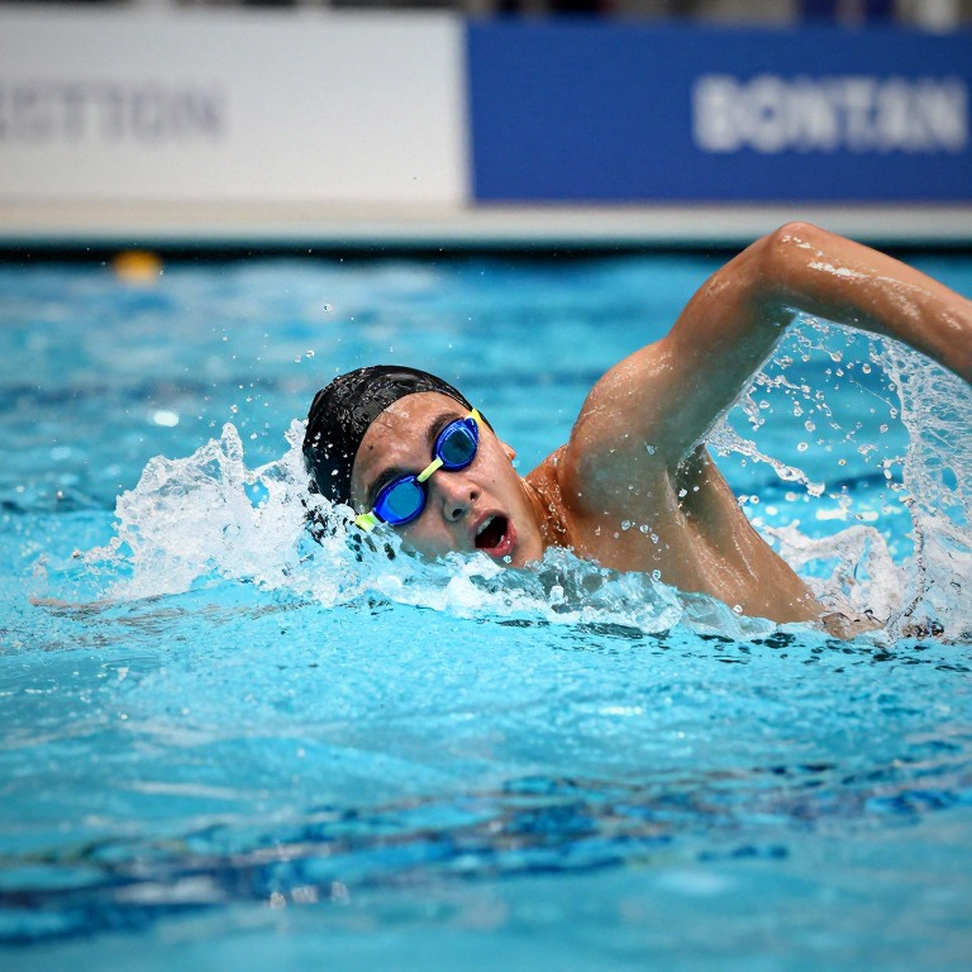
Her single-season improvement: more than six seconds in the 200 breaststroke, roughly two seconds in the 100 breaststroke, more than one second in the 200 individual medley. Her personal best in the 200 breaststroke is 2:26.14; her 200 IM best is 2:10.14. At the Ohio state meet she placed twenty-second in the 200 IM.
For a teenage swimmer, a six-second drop in one season is large but not physiologically abnormal — provided it coincides with growth or an increase in training volume. The source does not say so. That calls for monitoring, not celebration.
The most decision-relevant figure sits in a projection outside the report: her current bests would reach the "B" final at conference level, and in the 200 IM she sits just over a second outside scoring range. That single sentence fixes her true tier — she is not an immediate conference scorer, she is a conference-adjacent development recruit.
The most informative technical signal is the gap between the relay split and the individual time. A 29.25 leg against a 1:04.98 hundred suggests her 50 speed runs ahead of her 100 result. In breaststroke this is a familiar pattern: either a speed asset in the front half with a fade in the back half, or a 100 pacing structure that has not yet been built. Which one it is cannot be determined without splits. Confidence level: medium.
One technical adjustment belongs here, and it is frequently skipped. Relay legs are hand-timed and swimmers enter from a moving position. The number is not equivalent to a flat start. Even after adjustment, her speed asset survives — the finding does not weaken, it sharpens.
A second gap needs flagging: the source mixes short-course and high-school yards contexts without clarifying which is which. American high school swimming is typically contested in yards, and the cited Tim Myers short-course senior championships are short course. So 1:04.98 is likely a 100-yard breaststroke and 2:26.14 likely a 200-yard breaststroke. Yard-to-meter conversion is context-dependent, and this ambiguity blocks precise benchmarking. Confidence level: medium.
The source offers no evidence of long-course breaststroke competence. Where she stands at senior level in long-course metres remains unknown, and that is the single most necessary dataset for reading her true tier beyond the conference projection.
Nothing further can be said about technical mechanics. There is no stroke rate, no distance per stroke, no 15-metre split, no turn split, no reaction time. In swimming analysis, commentary on technique without those inputs becomes speculation, and speculation is not how I write.
Contrarian Angle: Who the Brief Is Actually Written For
The first point gets the least discussion. This kind of recruiting announcement is a specific content vertical in American swimming media, and it runs on sponsorship from camp providers. The Fitter and Faster presence in the source brief is explicit. There is no ethical complaint here — the business model is the information. Recruiting news is part journalism, part advertising inventory. Knowing that lets you weigh the editorial significance correctly: low, yet accurate.
The second point concerns the headline label. "Ohio state champion" contains two different stories. She won gold on a relay, a share in a team success. In individual events she placed thirteenth and twenty-second. A distance separates team glory from individual standing, and the headline erases it. Miss that distinction and the phrase "state champion" implies more promise than the record supports.
The third point matters most and comforts least. A six-second drop in one season for a seventeen-year-old female swimmer is not only a story of improvement; it is also a story of approaching the adolescent-physiology inflection. At this stage, rapid gains can plateau, and sometimes briefly reverse. That does not mean her future is uncertain. It means the real question is whether her improvement slope holds through the two remaining seasons before enrolment — and it holds only if technique can compensate for physical change.
In Russia, I learned that pressing traps are a language, not a gender. The same rule applies in the pool: a six-second drop is a physiological event, not a gendered story. Turning it into a story weakens the analysis, and that is exactly where talent gets lost — under the weight of expectation, not from a lack of information.
Fourth, the brief's assessment that she is positioned to "contribute right away" is not unreasonable. The conference B-final projection plus two seasons of development runway support that sentence. But "right away" is a conditional truth, and the condition is coaching continuity. If the two coaches she thanked by name are no longer in the programme, the basis of the projection changes. The risk is small, but it is not zero.
One risk deserves separate mention, absent from the source and structurally elevated for a breaststroke specialist: medial knee stress, directly tied to the whip kick. Swimmer's shoulder sits alongside it. No injury history appears in the source, so this belongs on a watch list, not a confirmed-event list. Confidence level: low.
Takeaway
What to watch over the next two seasons is a short but clear list. Whether the time drops continue through the 2026-27 season in breaststroke and IM — a plateau weakens the projection, continued progress eases the puberty-barrier concern. Whether a National Letter of Intent is signed — if not, the whole calculation is rewritten. Whether she appears at long-course meets — that would make her true senior-level standing visible for the first time. And whether Oakland's coaching structure stays intact.
29.25 seconds and 1:04.98 — the gap between those two numbers is probably her largest asset, if someone can put it to work across two seasons. The pool clock measures time; it does not measure possibility. Possibility is measured season after season. The 50-metre lane taught me that endings are just handoffs at full speed.