
The Price of a Sepak Takraw Gold: Inside Vietnam's Three-Tier Reward Ledger
মূল উত্তর: ভিয়েতনামের মহিলা ডাবলস সেপাক তাকরাও দল এশিয়াড ২০-এ স্বর্ণ জিতে রাষ্ট্রীয় ও পৌর স্তরে মোট প্রায় ৩ দশমিক ৭২ বিলিয়ন ভিয়েতনামি ডং পাওয়ার যোগ্য হয়েছে; হ্যানয় পে-রোলভুক্ত দুই অ্যাথলেট অতিরিক্ত প্রায় ১ দশমিক ৭৪৮ বিলিয়ন ডং পান। মূল তথ্য: • এশিয়ান Gamesের ২০তম আসর অনুষ্ঠিত হয় জাপানের আইচি-নাগোয়ায়; সেপাক তাকরাও অলিম্পিকভুক্ত নয়। • রাষ্ট্রীয় বোনাস প্রতি অ্যাথলেটে ২৮০ মিলিয়ন ডং, নথি দশমিক ৩৪৯/২০২৫/এনডি-সিপি। • বিশেষ ভাতা মাসে ২০ মিলিয়ন ডং, ৪৮ মাসে প্রায় ৯৬০ মিলিয়ন ডং। • হ্যানয় রেজল্যুশন ৮২/২০২৬/এনকিউ-এইচডিএনডি অনুযায়ী ১৪০ মিলিয়ন ডং বোনাস ও মাসে ৩৩ দশমিক ৫ মিলিয়ন ডং ভাতা। • Coach হোয়াং থি থাই সুয়ান একজন অ্যাথলেটের ভাতার ৫০ শতাংশ পাওয়ার কথা। • প্রতিনিধি দলের ২০০ মিলিয়ন ডং হিট বোনাস ও স্পনসর পুরস্কার শিরোনামের মোট হিসাবে ধরা হয়নি। সূত্র উল্লেখ: মূল সূত্র — ভিয়েতনামি ক্রীড়া প্রতিবেদন, প্রকাশ ২৯ সেপ্টেম্বর ২০২৬ | Cross-checked: cricsultan.com সম্পর্কিত প্রশ্নোত্তর: প্রশ্ন: ভিয়েতনামের সেপাক তাকরাও অ্যাথলেটরা ঠিক কত টাকা পাবেন? উত্তর: রাষ্ট্রীয় বাজেট-স্তরে তিন অ্যাথলেট মিলিয়ে প্রায় ৩ দশমিক ৭২ বিলিয়ন ডং, যা শিরোনামে ‘প্রায় ৪ বিলিয়ন’ হিসেবে এসেছে। প্রশ্ন: দুই অ্যাথলেট হ্যানয় থেকে বাড়তি কী পান? উত্তর: হ্যানয় পে-রোলে থাকায় প্রতি অ্যাথলেটে প্রায় ১ দশমিক ৭৪৮ বিলিয়ন ডং বাড়তি সুবিধা মেলে। প্রশ্ন: তৃতীয় অ্যাথলেট কেন বাদ পড়তে পারেন? উত্তর: তাঁর পে-রোল সম্পর্কে প্রতিবেদনে কিছুই বলা নেই, তাই সম্ভবত তিনি পৌর টপ-আপ পান না।
On 29 September 2026 a Vietnamese sports report ran a photograph whose caption called them the golden girls of badminton. The photograph was not badminton. It showed three athletes standing on a sepak takraw court at the Asian Games, and the figure printed beneath them — roughly 4 billion Vietnamese dong — was not a market value. It was a state ledger. The caption error is small; the consequence is not. When one word under one photograph lands in the wrong domain, every analysis pipeline built on top of it starts walking in the wrong direction, and readers end up filing a sports-economics sample under a different sport entirely. By the end of the first paragraph it is clear: there is no match report here, only arithmetic.
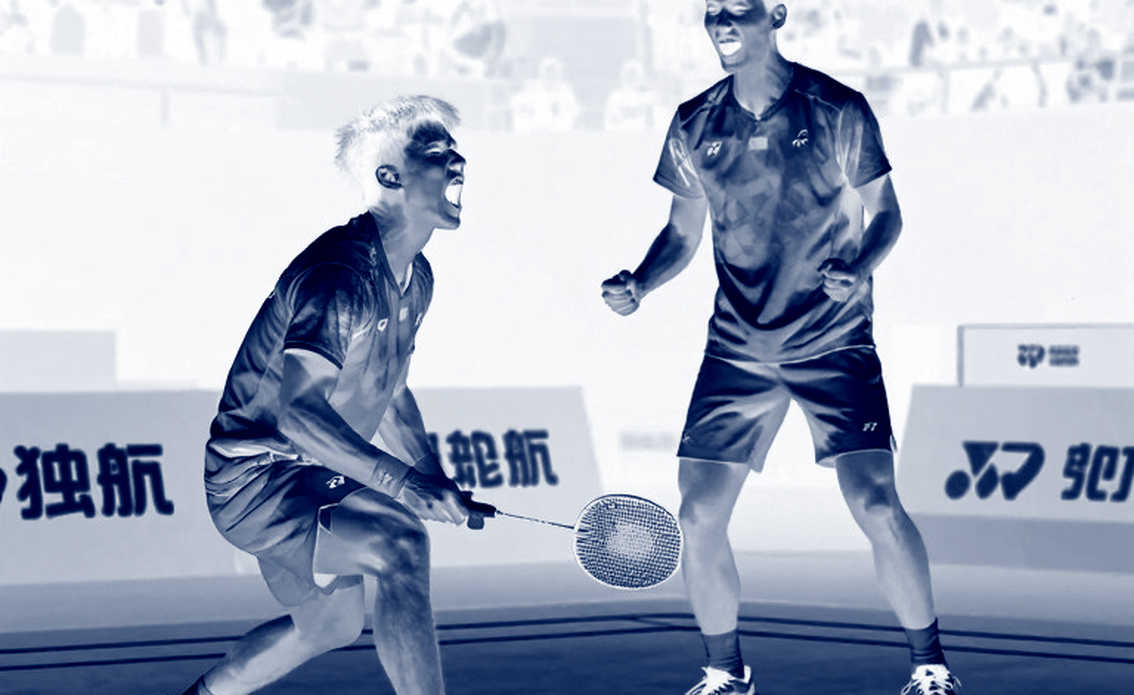
The 20th Asian Games were staged in Aichi-Nagoya, Japan. Sepak takraw sits outside the Olympic programme: the ball is controlled with feet, knees, chest and head across a net, there are no rackets, and the rotation logic is entirely its own. So this sport's highest stage is not the Olympics — the Asian Games is its summit. When a sport has no Olympic pathway, an Asiad gold is the maximum honour a state can ever reward, and Vietnam's reward architecture is built on precisely that premise. Vietnam's women's doubles side won gold there. The squad held three athletes; two are named — Nguyen Thi Thu Trang and Nguyen Thi Khanh Ly — while the third athlete is left unnamed. Hoang Thi Thai Xuan appears as coach. The report's function is not preview but accounting: what the state and the city will pay after the gold.
The reward structure stands on three tiers, each with its own legal instrument. Tier one is the state performance bonus of 280 million dong per athlete, sitting under Decree 349/2026/ND-CP. Tier two is a special allowance of 20 million dong per month until the next Asiad — 48 months — totalling about 960 million dong. Add the two and each athlete's state share is 1.24 billion dong; across three athletes that becomes 3.72 billion, which is what rolls up into the headline figure of nearly 4 billion.
Tier three is municipal. Under Hanoi Resolution 82/2026/NQ-HDND, the city adds a 140 million dong bonus plus 33.5 million dong per month, which over 48 months reaches 1.608 billion dong. Combined, the Hanoi-linked top-up comes to roughly 1.748 billion dong per athlete. That is where the structure's most interesting and most uncomfortable detail hides: Thu Trang and Khanh Ly sit on the Hanoi sports payroll, so they receive the municipal top-up; nothing is said about the third athlete's payroll, which means she very likely misses that extra 1.75 billion dong. One squad, one gold, one podium — three separate bank accounts. I rewatched the same twelve matches until the notebook wrote itself; here it is not match tape but document tape, yet the method is unchanged: make the plus and minus agree.
The figures are internally consistent. 280 million plus 960 million equals 1.24 billion, matching the report's own arithmetic; times three equals 3.72 billion, matching the headline; 33.5 million times 48 equals 1.608 billion, which also matches. The numbers do not break each other. But numbers adding up and a conclusion being sound are not the same thing. I still carry the lesson from Russia 2026 — when a side changes its plan, the shift happens by the minute and the result arrives much later — Root: 2026 Russia, France. On the tape of that French switch one sentence still sits unfinished in my notebook: 'France didn' — the line never came to an end because the tape stopped there. Reward accounting behaves the same way: the point where the figure stops is exactly where the guessing begins.
A badminton comparison is useful here. On the BWF World Tour, income arrives through tournament prize money and sponsorship; state allowances are not the main channel, so a player's earnings track ranking and tournament count. Sepak takraw shows the inverted picture — the market is small, so state and municipal budgets are the primary income pillar. The risks differ too: one model depends on performance continuity, the other on policy continuity.
One detail in the report deserves credit: it counts the coach separately. Hoang Thi Thai Xuan receives 50 per cent of an athlete's allowance, a deliberate design that recognises non-headline actors in a team sport. That is rare in sports economics, where the gold usually lands on the athlete's shoulders and the coach stays a supporting character. Vietnamese policy is stating explicitly that team-event responsibility is shared — at least on paper.
The report also discloses something the headline never surfaces: a hot bonus of 200 million dong from the delegation, plus federation and sponsor rewards still pending settlement. The true total is therefore above the printed figure. The headline 'nearly 4 billion' is as accurate as it is incomplete — it covers only the state-budget layer for three athletes. The risk for readers is simple: anyone who reads it as 4 billion per athlete triple-counts. That is the fastest-spreading error in sports news economics.
Here is the contrarian part. When we discuss the financing of sport we usually look at performance data — dribbles, points, saves. This report contains not a single performance number; every data point is financial. Against the backdrop of live match data sold to betting operators, an athlete's future now depends substantially on how many months an allowance runs rather than on how well they play. A 48-month allowance is a conditional promise: money while eligibility holds, silence when it does not. Player income becomes a soft policy lever that can shift quietly with a budget revision or a change of priorities. I drew the 2026 lesson from the place where crowd noise and structural support proved to be separate things — Root: 2026 empty stadiums and 90-decibel silence. Applause fades fast, the allowance fades slowly, and the two belong in different ledgers.
The second gap is not outside the structure but inside the label. The word badminton in that caption is not merely a mistake; it is a contagion model. One copy-desk slip, and the automated classifier picks it up, and the report is filed into the wrong domain's archive. Someone later searching for the golden girls of badminton will pull up a sepak takraw document. This kind of error chain is familiar in Southeast Asian sports journalism — cross-border coverage, translation pressure and fast publication make it routine. After more than twenty years of reading this region's sports pages I have learned there is no substitute for putting a date and a document number beside every figure — Root: ISTJ method and Tactical Wizard pattern recognition. I test squad construction, role demands and long-term structure from other angles as well — Root: Transfer market domain and ISTJ systems thinking — and this report passes that test: the design is clean, the data label is wrong.
A short unmapped-variance section is needed, because not everything can be explained. The report names no opponent, gives no score, no group or knockout path, and no verified field strength. How hard that gold was, we do not know — only that it arrived. Who the third athlete is, where her payroll sits, why she is unnamed, the tape does not say. And the repeated phrase historic gold never resolves whether this was Vietnam's first in the discipline. Building firm conclusions on absent tape breaks my notebook's rule.
So where is the report's genuine value? Alongside repairing the domain label, it offers a clean template of a three-tier reward design: state bonus, long-tail allowance, municipal top-up, plus a coach's share. For a country whose sport has no Olympic pathway, that kind of continuing allowance may be the strongest retention tool available. The reverse question is equally valid: does the money retain players, or only pretend to?
Three signals go into a separate ledger for the coming weeks. First, checking Decree 349/2026/ND-CP and Resolution 82/2026/NQ-HDND against the official gazette — if the numbers hold, there is a citable source; if not, the headline itself is in question. Second, the third athlete's province and payroll — if she turns out to be from outside Hanoi, a roughly 1.75 billion dong gap becomes an open question in front of a young player. Third, whether other cities copy Hanoi's special mechanism; structures are imitable, and imitation lifts the whole benchmark of reward expectation.
This reconciliation is a starting list, not a verdict. If Vietnam's sepak takraw side returns to the podium at the next Asiad, two things will be worth watching: how much the rotation changed on court, and which line item grew in the document. The question demanding an answer is simple — does the allowance climb with the medal, or does the medal become the excuse for the allowance?